

Two Roller Steel Bending Machine
Three Roller Bending Machine
Four Roller Rolling Machine
Profile bending machine
Auxiliary products
Upper Roll Bending Machines
Industry News
Structural Principle of Plate Rolling Machine
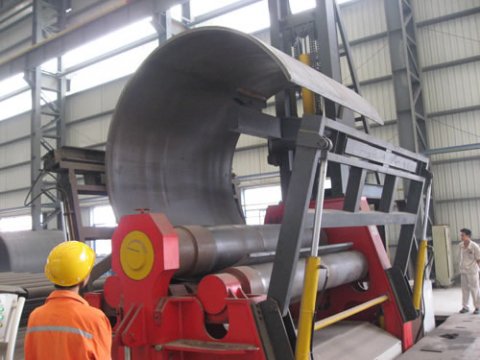
A plate rolling machine is mainly composed of three parts: the main machine, hydraulic station, and electric control cabinet. The high-pressure oil produced by the electric oil pump is delivered to the working cylinders or hydraulic motors through high-pressure oil pipes. The hydraulic system generates the required thrust and torque to drive the rollers and bend the metal plate.
During the rolling process, the transmission roller uses the friction between the roller and the metal plate to drive the other rollers. As the plate passes continuously between the rollers, it is gradually formed into a cylindrical or curved shape. By adjusting the distance between the rollers, the machine can accommodate different plate thicknesses and bending diameters.
In a three-roller symmetrical plate rolling machine, the upper roller moves vertically along the symmetrical centerline between the two lower rollers. The lower rollers rotate through the transmission system and provide the required torque for plate rolling. By controlling the position and rotation of the rollers, the machine can achieve stable and accurate plate forming.
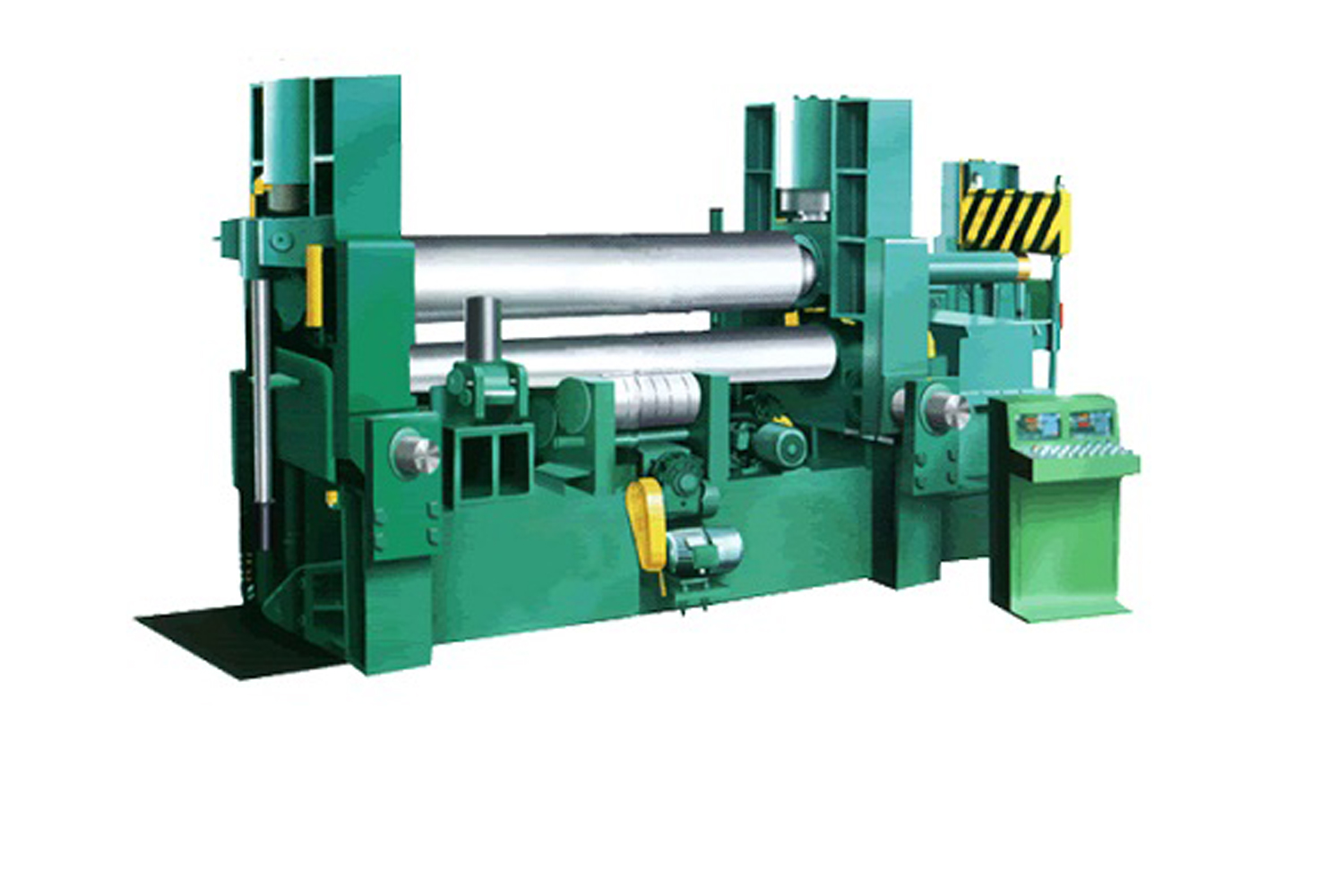
Five Major Technological Features of the Three-Roller Plate Rolling Machine
- High Performance:Hydraulic drive and automatic control provide stable and efficient rolling performance.
- High Motor Power:A powerful and efficient drive system supports different plate rolling requirements and improves production efficiency.
- High Strength:The machine features a robust structure designed for stable and safe operation under demanding working conditions.
- Reliable and Durable:Strong machine construction, stable performance, and durable components help extend the service life of the equipment.
- Wide Applicability:Three-roller plate rolling machines are widely used in industries such as boilers, chemical processing, mining, construction, and shipbuilding.
Vibrating Conveyor for Efficient Material Handling
In addition to metal forming equipment, efficient material handling is also an important part of modern industrial production. A Vibrating Conveyor uses controlled vibration to move bulk materials continuously along a conveying surface. It is suitable for transporting materials such as metal parts, aggregates, minerals, powders, and other bulk products.
Compared with conventional conveying methods, a vibrating conveyor offers reliable material flow, simple operation, and flexible installation. It can also be integrated with feeding, screening, cooling, and other processing equipment, making it a practical solution for automated production lines and bulk material handling systems.
Applications of Plate Rolling Machines
Plate rolling machines are widely used to manufacture cylindrical and curved components for different industrial applications. Typical products include tanks, pipes, pressure vessels, boilers, storage vessels, and structural components.
The equipment is commonly used in industries such aschemical processing, construction, shipbuilding, mining, power generation, and general metal fabrication.
Conclusion
A plate rolling machine can complete the pre-bending and rolling of various cylindrical and arc-shaped workpieces after a single loading. Its reliable performance makes it an important piece of equipment for modern metal fabrication.
The three-roller plate rolling machine features a relatively simple structure, convenient operation, high forming accuracy, and good production efficiency. It is widely used as a practical metal processing solution across many industrial sectors.


