

Two Roller Steel Bending Machine
Three Roller Bending Machine
Four Roller Rolling Machine
Profile bending machine
Auxiliary products
Upper Roll Bending Machines
Industry News
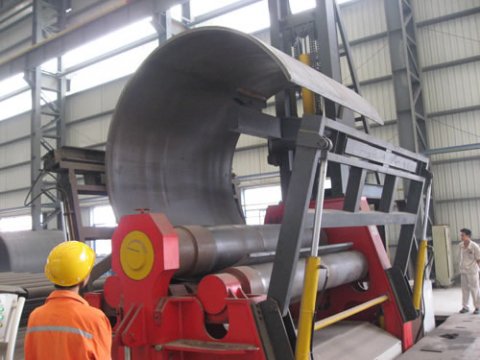
A plate rolling machineis a metal forming machine designed to bend and roll flat metal plates into cylindrical, arc-shaped, conical, and other curved profiles.
The machine uses the three-point forming principle to apply controlled pressure through its rollers. By adjusting roller positions, pressure, and rotational movement, it creates continuous plastic deformation and produces workpieces with accurate and consistent geometries.
Three-Roller Plate Rolling Machine Overview
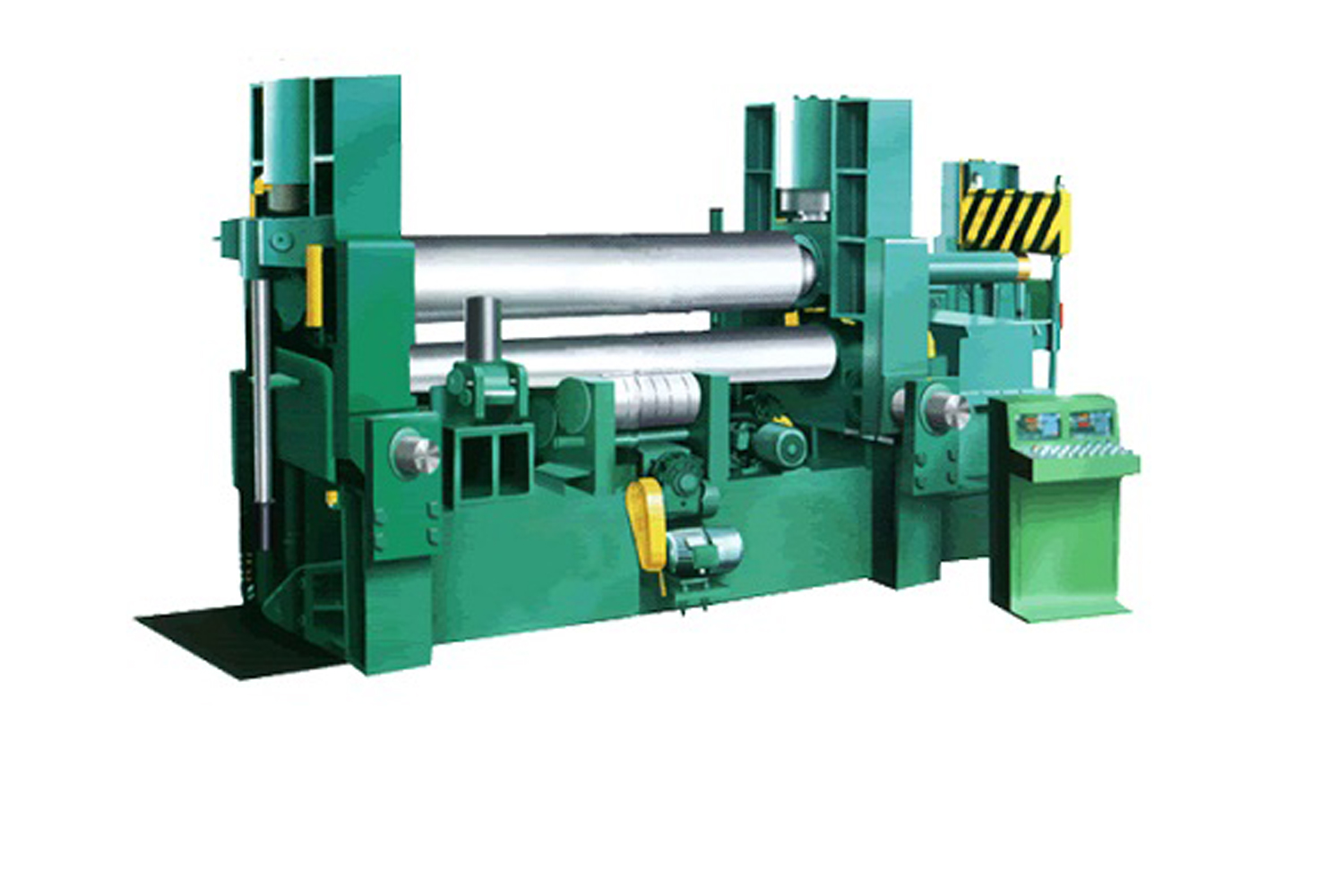
The three-roller plate rolling machine is a versatile metal forming solution for bending and rolling metal plates into precise curved shapes. It uses coordinated roller movement to gradually deform the workpiece while maintaining stable forming conditions.
During the rolling process, the plate passes between three rollers. The rollers apply controlled pressure and rotation to gradually form the required radius. This process provides stable forming accuracy, high production efficiency, and good repeatability.
Three-roller plate rolling machines can process a wide range of metal plates and produce cylindrical, arc-shaped, conical, and customized curved workpieces. Manufacturers commonly use them in industries such as automotive manufacturing, shipbuilding, construction, pressure vessel fabrication, and general machinery manufacturing.
How Does a Three-Roller Plate Rolling Machine Work?
The machine forms metal plates through coordinated roller movement and controlled pressure. Operators adjust the roller position according to the material thickness, width, material properties, and required bending radius.
As the rollers rotate, they gradually feed the plate through the working area. The repeated application of pressure causes permanent plastic deformation, allowing the machine to achieve the desired curved shape.
By accurately controlling the roller position and forming parameters, the machine can produce consistent workpieces while reducing deformation errors and improving production efficiency.
Three-Roller Plate Rolling Machine: Wide Applications Across Industries
Three-roller plate rolling machines can process various materials, including carbon steel, stainless steel, aluminum, and alloy steel plates. Depending on the machine configuration and tooling, they can form cylindrical, arc-shaped, conical, and other customized workpieces.
Common applications include:
- Automotive manufacturing
- Shipbuilding and offshore engineering
- Steel structure and construction
- Pressure vessel fabrication
- Machinery manufacturing
- Storage tanks and cylindrical components
Vibrating Conveyor for Efficient Material Handling
A Vibrating Conveyor is a material handling machine that uses controlled vibration to move bulk materials from one location to another. It is commonly used for conveying, feeding, and transferring materials in industrial production lines.
The conveyor generates a controlled vibrating motion that moves materials along the conveying surface. This design provides steady material flow while reducing the need for complex mechanical transmission systems.
Vibrating conveyors can handle a wide range of bulk materials, including metal parts, aggregates, minerals, powders, and other industrial materials. They are widely used in mining, metallurgy, chemical processing, foundries, building materials, and manufacturing plants.
When integrated into an automated production line, a vibrating conveyor can provide continuous and controlled material transfer between different processing stages. Its simple structure, reliable operation, and flexible layout make it suitable for many industrial material handling applications.
Key Features and Advantages of Three-Roller Plate Rolling Machines
High Forming Precision
Precise roller positioning helps maintain uniform deformation throughout the plate. This improves dimensional accuracy and provides consistent forming results.
Strong Material Adaptability
The machine can process different plate materials and thicknesses by adjusting the roller position and forming parameters according to specific production requirements.
Stable and Reliable Operation
A robust mechanical structure allows the machine to withstand continuous forming loads. Proper machine configuration also supports stable operation during long production cycles.
Easy Operation and Maintenance
Modern plate rolling machines use practical control systems and accessible mechanical components. Operators can adjust forming parameters efficiently, while technicians can perform routine inspections and maintenance with less downtime.
Key Maintenance Methods for Three-Roller Plate Rolling Machines
Proper maintenance directly affects machine stability, forming accuracy, production efficiency, and service life. Operators should establish a regular maintenance schedule based on the machine's working conditions and production frequency.
1. Regular Lubrication
Lubricate roller shafts, bearings, transmission components, and other specified moving parts at scheduled intervals. Proper lubrication reduces friction, minimizes mechanical wear, and helps maintain smooth machine operation.
2. Cleaning and Routine Maintenance
Clean the machine regularly and remove metal chips, dust, oil residue, and other debris from the working area. Keeping the equipment clean helps prevent contamination from affecting mechanical and electrical components.
3. Periodic Inspection
Inspect rollers, bearings, hydraulic components, fasteners, electrical connections, and other key components regularly. Repair or replace worn or loose parts promptly to reduce the risk of unexpected downtime.
4. Roller Gap Adjustment
Check and adjust the roller gap according to the plate thickness, material properties, and required forming radius. Correct roller settings help improve rolling accuracy and maintain stable production quality.
5. Operating Environment Control
Keep the machine in a clean, dry, and well-maintained working environment. Proper control of dust and humidity helps protect mechanical, hydraulic, and electrical components from premature damage.
Conclusion
The three-roller plate rolling machine is an important piece of equipment for modern metal forming applications. By applying controlled pressure and coordinated roller movement, it produces permanent plastic deformation and forms metal plates into cylindrical, conical, arc-shaped, and other curved profiles.
Its flexible material compatibility, stable forming performance, and wide range of applications make it suitable for many manufacturing industries. At the same time, proper operation, regular inspection, and systematic maintenance can improve production efficiency, maintain consistent product quality, and extend the service life of the equipment.
Previous: 上一篇:What Is a 4-Roll Plate Rolling Machine? Applications and Selection Guide
Next: 下一篇:没有了


